

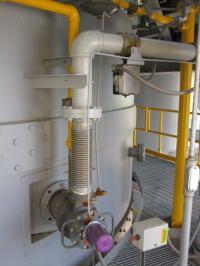
 Multiple hearth furnaces (MHFs) are designed for demanding industrial applications and continuous operation. Their stacked hearth design allows material to move through multiple controlled temperature and processing zones while maintaining relatively low horsepower requirements. When properly operated and maintained, these furnaces can provide years of reliable service with relatively low internal maintenance requirements.
However, low maintenance does not mean no maintenance. A proactive maintenance program can help identify developing problems before they lead to unexpected shutdowns, production losses, costly repairs, or shortened equipment life.
Here are several maintenance best practices for keeping a multiple hearth furnace operating safely, efficiently, and reliably.
1. Establish a Preventive Maintenance Schedule
One of the most important steps in maintaining a multiple hearth furnace is moving away from a purely reactive approach.
Preventive maintenance should include regularly scheduled inspections of critical mechanical, refractory, combustion, instrumentation, and emissions-control components. Maintenance intervals should be based on the furnace design, process conditions, operating history, manufacturer recommendations, and applicable regulatory requirements.
Keeping detailed maintenance records is equally important. Tracking repairs, inspections, operating abnormalities, and component replacements can help maintenance teams identify recurring problems and anticipate future needs.
Industrial Furnace Company (IFCO) offers preventive maintenance services as well as annual furnace inspections that include written reports identifying current issues and forecasting potential future concerns.
2. Inspect Refractory and Hearth Conditions of the Multiple Hearth Furnace
Refractory is a critical component of a multiple hearth furnace. A typical MHF consists of a steel shell with refractory lining and multiple refractory hearths supported within the furnace.
Regular inspections should look for indications of refractory deterioration, including cracking, spalling, erosion, loose material, damaged burner tiles, and other areas of abnormal wear.
Small refractory problems can become much larger if they are allowed to progress. Addressing deterioration during planned maintenance periods can help protect the furnace shell, maintain proper thermal conditions, and reduce the likelihood of a more extensive refractory repair later.
The condition of the hearths themselves should also be evaluated. Because hearth geometry affects material movement and gas flow through the furnace, damaged refractory can eventually affect more than structural integrity—it can influence furnace performance as well.
3. Monitor the Centershaft, Rabble Arms, and Rabble Teeth of the Multiple Hearth Furnace
Material movement through a multiple hearth furnace depends heavily on its mechanical rabbling system.
The centershaft rotates slowly through the furnace, moving the rabble arms and rabble teeth. The teeth move material across each hearth toward the appropriate drop holes while exposing fresh material to the furnace atmosphere.
Because these components operate continuously under demanding conditions, operators should monitor them for unusual wear, alignment problems, abnormal movement, vibration, or other changes in operation.
Rabble patterns should also receive attention. Changes in feed characteristics or furnace operating conditions can affect how material moves across the hearths. IFCO's engineering experience includes evaluating and modifying rabbling patterns when process conditions change.
4. Keep the Multiple Hearth Furnace Combustion System Properly Maintained and Tuned
The combustion system is essential to multiple hearth furnace startup, refractory dry-out, and processes requiring supplemental heat.
Burners and their associated controls should therefore be inspected and maintained routinely. Maintenance may include checking burner condition and operation, cleaning burner tunnels when necessary, evaluating flame characteristics, checking fuel and air delivery, and verifying that combustion controls are operating correctly.
Burner tuning can also help maintain the temperatures required by the process while supporting efficient fuel use.
IFCO designs, installs, maintains, and tunes industrial furnace combustion systems and can also evaluate systems for applicable NFPA requirements.
5. Monitor Multiple Hearth Furnace Temperature and Process Conditions
One of the advantages of a multiple hearth furnace is its ability to create separate processing zones. Depending on the application, material may move through stages involving drying, devolatilization, calcining, reduction, oxidation, combustion, or cooling.
That advantage depends on maintaining appropriate conditions within each zone.
Operators should routinely monitor temperature readings and other relevant process variables and investigate unexpected deviations. Changes in temperature profiles, airflow, oxygen levels, feed conditions, or other operating parameters can sometimes provide early warning of mechanical, combustion, instrumentation, or process problems.
Modern instrumentation and controls can make this monitoring significantly easier. Advanced process controls can be used to optimize product yield, product quality, furnace conditions, and fuel consumption.
6. Inspect Multiple Hearth Furnace Instrumentation and Control Systems
Mechanical components are only part of a multiple hearth furnace maintenance program. Sensors, instruments, control panels, alarms, interlocks, and other automation components should also be inspected and tested regularly.
A faulty sensor may provide inaccurate information even when the furnace itself is operating correctly. Conversely, trends within the control system can help operators identify a developing equipment problem before it results in a shutdown.
For facilities with older multiple hearth furnaces, control-system modernization can also provide an opportunity to improve monitoring and automate portions of the process that previously required greater operator intervention.
7. Watch for Slag and Material Buildup in the Furnace
Slag, ash, and process-material buildup can interfere with furnace performance and eventually damage multiple hearth furnace components.
Areas around burners, hearths, drop holes, exhaust passages, and material-handling equipment should be inspected for abnormal accumulation. Cleaning and de-slagging should be incorporated into the maintenance program as appropriate for the furnace and process.
Burner design can also affect maintenance requirements. For example, Industrial Furnace Company's multiple hearth furnace burner design uses gas velocity to help keep ash and product out of the burner tunnel. If slag does develop, the burner internals can be removed to provide access for cleaning from outside the furnace, often without requiring other burners to be shut down.
8. Include Air Pollution Control Equipment in the Multiple Hearth Furnace Maintenance Plan
The multiple hearth furnace itself should not be considered in isolation. Exhaust handling and air pollution control equipment are part of the overall thermal processing system.
Depending on the installation, this may include wet scrubbers, breeching, stacks, continuous emissions monitoring systems (CEMS), flue gas recirculation systems, fans, ductwork, and related controls.
These components should be inspected and serviced as part of the facility's overall preventive maintenance program. Problems downstream of the furnace can affect system performance even when the furnace itself is mechanically sound.
9. Plan for Spare Parts Before You Need Them
Waiting for a critical component of a multiple hearth furnace to fail before locating a replacement can turn a relatively straightforward repair into an extended shutdown.
Facilities should identify critical furnace components and determine which parts should be kept readily available. Maintenance teams should also consider the lead times associated with specialized refractory shapes, castings, mechanical components, and combustion equipment when developing their spare-parts strategy.
Industrial Furnace Company maintains a 100,000-square-foot warehouse with refractory products, furnace parts, and castings to help customers minimize furnace downtime.
10. Schedule Comprehensive Multiple Hearth Furnace Inspections
Routine operator inspections are valuable, but they should be supplemented by more comprehensive inspections from technicians experienced specifically with multiple hearth furnace systems.
A detailed inspection can assess the condition of refractory, hearths, combustion equipment, mechanical components, controls, and supporting systems while identifying both immediate maintenance needs and potential future concerns.
This creates an opportunity to prioritize repairs and incorporate them into planned outages rather than waiting for an unexpected failure.
A Proactive Approach Helps Maximize Multiple Hearth Furnace Reliability
Multiple hearth furnaces are engineered for long-term industrial operation and can run year-round with relatively limited internal maintenance. Achieving that reliability, however, depends on consistent monitoring and a well-planned preventive maintenance program.
Regular inspections, refractory maintenance, combustion-system tuning, mechanical checks, instrumentation testing, cleaning, operator training, and strategic spare-parts planning can help facilities minimize unplanned downtime and extend equipment service life.
Industrial Furnace Company has built or repaired hundreds of multiple hearth furnaces and provides support throughout the furnace lifecycle, including engineering, inspections, preventive maintenance, refractory installation and repair, combustion-system maintenance, controls and instrumentation, replacement parts, optimization, and emergency services.
For facilities looking to evaluate the condition of an existing multiple hearth furnace or develop a more proactive maintenance strategy, contact us for more about our multiple hearth furnace maintenance and service capabilities.